
Paul Thiebaud Gallery
645 Chestnut Street, San Francisco, CA 94133
North Beach
Monday | Closed
Tuesday | 10:00 AM - 6:00 PM
Wednesday | 10:00 AM - 6:00 PM
Thursday | 10:00 AM - 6:00 PM
Friday | 10:00 AM - 6:00 PM
Saturday | 10:00 AM - 6:00 PM
Sunday | Closed
Eileen David: The City Beckons| May 16 - July 2, 2026
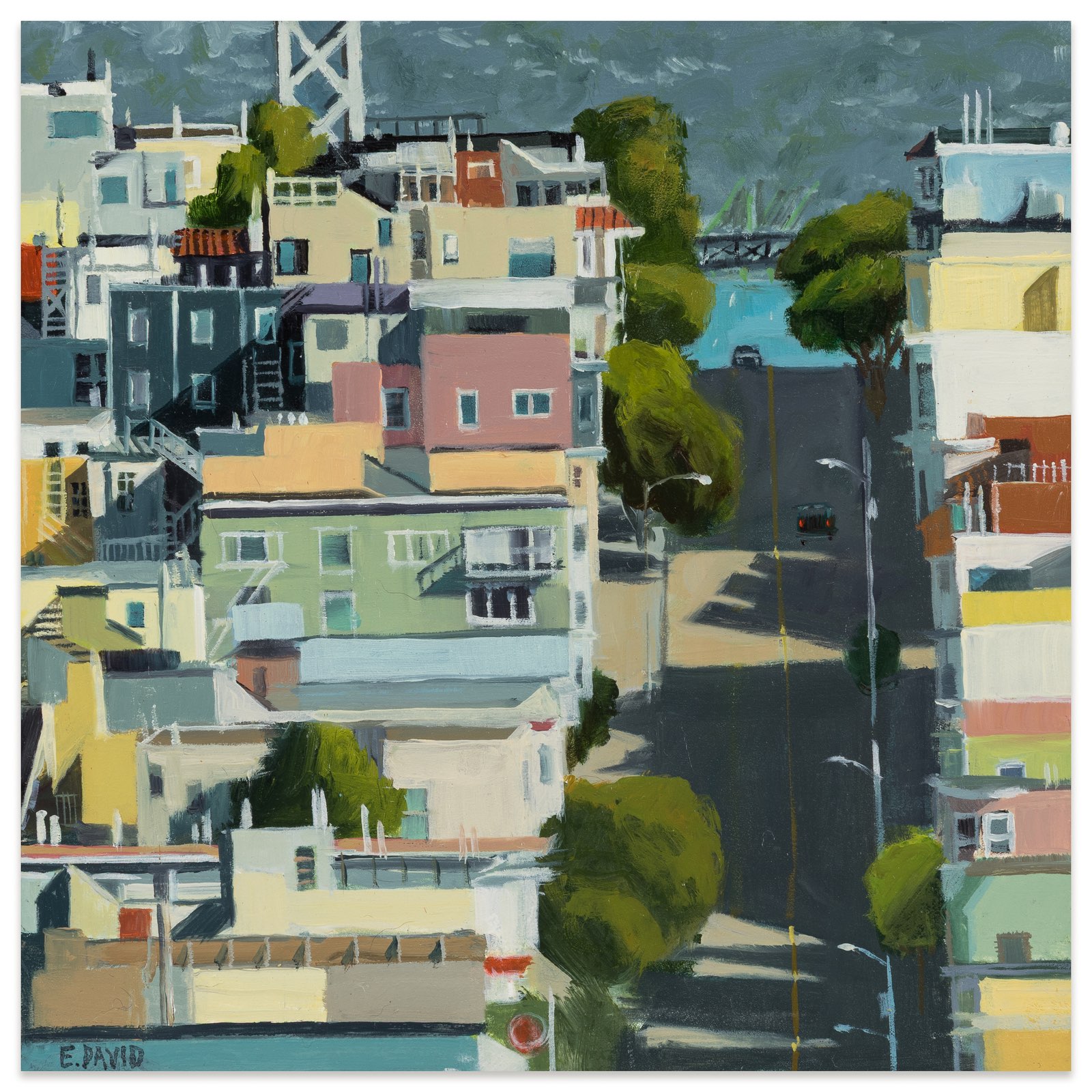
Paul Thiebaud Gallery is pleased to announce the opening of Eileen David: The City Beckons on Saturday, May 16, 2026 from 3-5 pm. The sixteen recent paintings on view capture her continued fascination and dialogue with the urban landscape. Eileen David showcases her muse, San Francisco, with delicate brushstrokes in small and medium scale paintings. The exhibition will be on view through July 2, 2026.
Eileen David’s love of urban landscapes began in metropolitan New York City with “recollections of soft light on timeworn iconic forms that make up the skeletal bones of the city,” as she described. Since bringing this foundation to San Francisco in the mid-1970s, she has seen the city’s many iterations. Feeling like an explorer, David searches for a visceral response to what she sees, and these recent small-scale works arranged in a salon fashion are places that resonate with her. Some of the locations recreated in these paintings will be lovingly familiar to the viewer. Others will be inspired to find the painted scene and become explorers of our great city like David.
The largest work in this series of paintings is Vertical City, a nod to Wayne Thiebaud’s many paintings and prints depicting San Francisco’s southern neighborhoods of Potrero Hill and Bernal Heights. It is the sort of hill that tourists do not think really exists until they brace themselves while traveling up and down the city’s vertiginous terrain in a car. In this show, David takes the viewer for a ride past colorful Victorian houses nestled in trees and vibrant plants contrasted with somberly gray roads. There are pops of color softened by the wind and fog into unmissable pastels in late afternoon shadows.
Born and raised in New York City, Eileen David was educated at San Francisco State University where she earned a bachelor’s degree in Studio Art and Art History in 2001. In 2005, she received her MFA at San Jose State University and was awarded the prestigious Joan Mitchell Foundation MFA Grant Award. Throughout her life, she has brought her love of art and prowess to many classrooms and studios throughout the Bay Area. Since 2006, David has taught painting and watercolor at Skyline College in San Bruno, California. She resides in Daly City.
The City Beckons marks Eileen David’s eighth exhibition with the Paul Thiebaud Gallery, where she has been a represented artist since 2006.
Along the Way, continued... Artworks by John Moore and MYL3Z | May 16 - July 2, 2026
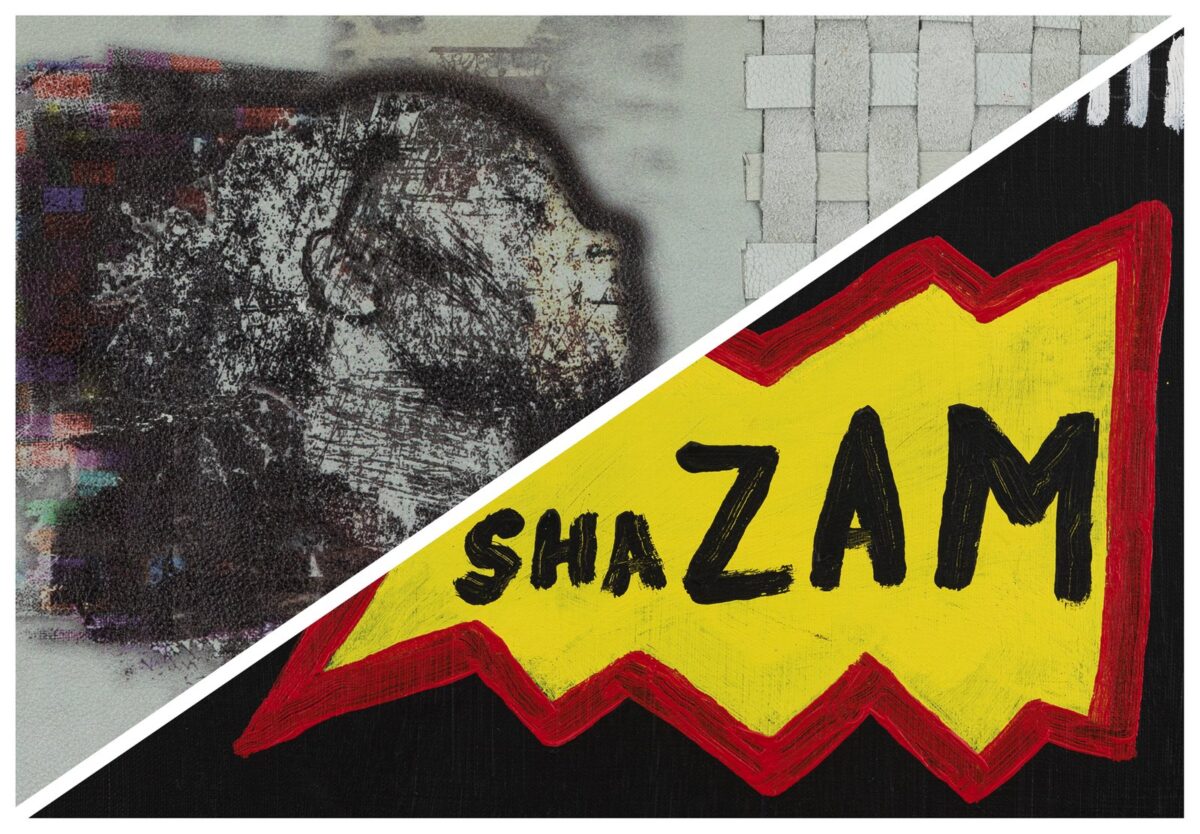
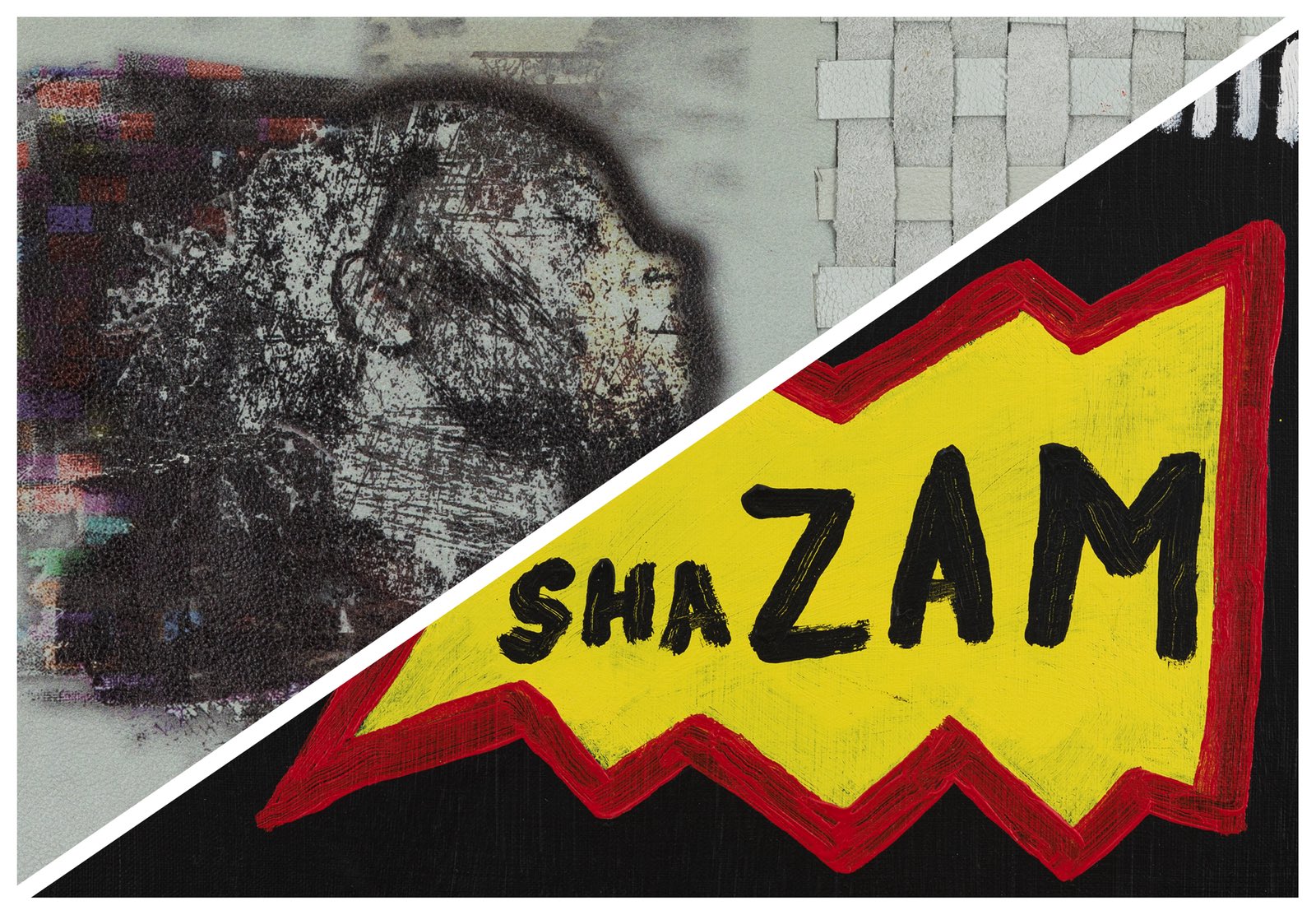
Paul Thiebaud Gallery is pleased to announce the opening of Along the Way, continued… Artworks by John Moore and MYL3Z on Saturday, May 16th, from 3-5pm, with remarks at 3:30pm. On view will be paintings and mixed media constructions by John Moore and sculptural assemblages and acrylic prints on woven leather by MYL3Z. Inspired by the everyday moments of their lives, the artworks of John Moore and MYL3Z draw upon memory, urban storytelling, and the rhythms of African American culture and community as the source for their creation. The exhibition will be on view through July 2, 2026.
Selected from the final four decades of his career, Along the Way, continued… stands as a memorial exhibition for the late John Moore (1938-2025) who made work for over 60 years. Rarely seen except by friends and family who visited his home, Moore’s works contain a variety of themes and subject matter. One of Moore’s greatest loves was music and musicians, which can be found in works such as Charlie Parker “Yardbird” (n.d.) and James Brown (1989). In many of Moore’s works, color, line, and composition are variously combined with mixed media objects, headlines from newspapers, and/or song lyrics. Moore’s paintings and sculptures are an extension of the numerous journals he kept, their pages full of collaged found imagery and words juxtaposed next to each other. Moore did not consider himself an artist and eschewed the trappings of the art world. Rather, he was a self-taught maker for whom creating his work was something he was simply compelled to do. In this light, each of his works acts as an informal biographical moment from his life, in addition to reflecting key moments in the history of African American culture in the United States.
MYL3Z is an emerging creative and maker whose works center on found objects gathered from the urban environment and the histories they contain. Through the arrangement of materials, MYL3Z processes memory and navigates the complexities of identity and inheritance. The grandson of John Moore and renowned Bay Area artist Mildred Howard, the influence of his family is visually and emotionally present in these first works to emerge from his studio. In MYL3Z’s words, each work echoes “the improvisational logic of everyday survival…” through “repair, reuse, and reimagining…”, while also honoring traditions passed down through his family.
John Moore was born in Vicksburg, Mississippi, in 1938 and moved to Oakland, California at the age of three. In 1957 he moved to North Oakland, where he would live until his passing in 2025. His works have been shown in a solo presentation at Roll Up Project in 2020, and in group exhibitions, including Midas at the Berkeley Art Center in 2022, Five and Two Others with Oliver Jackson at Creativity Explored in 2019, a 2006 exhibition at Santa Rosa Junior College with his longtime partner Mildred Howard, and an exhibition at the Fiber Works Center for the Textile Arts in the 1970s alongside Raymond Holbert, Arthur Monroe, E.J. Montgomery, and Raymond Saunders. A monograph of his works titled Along the Way: The Art of John Moore, with an essay by Nick Stone, was published in 2018.
Lamar “MYL3Z” Brown was born in Oakland and raised in Berkeley, California. MYL3Z has spent most of his life working closely alongside his grandmother and mentor, Mildred Howard. Her influence has been fundamental to his path as a creative and maker. His works have previously been exhibited alongside his grandmother’s at Turner Carroll Gallery in Santa Fe, New Mexico in 2022. In addition to being a maker, MYL3Z is a music producer, actor, and filmmaker working in Oakland.
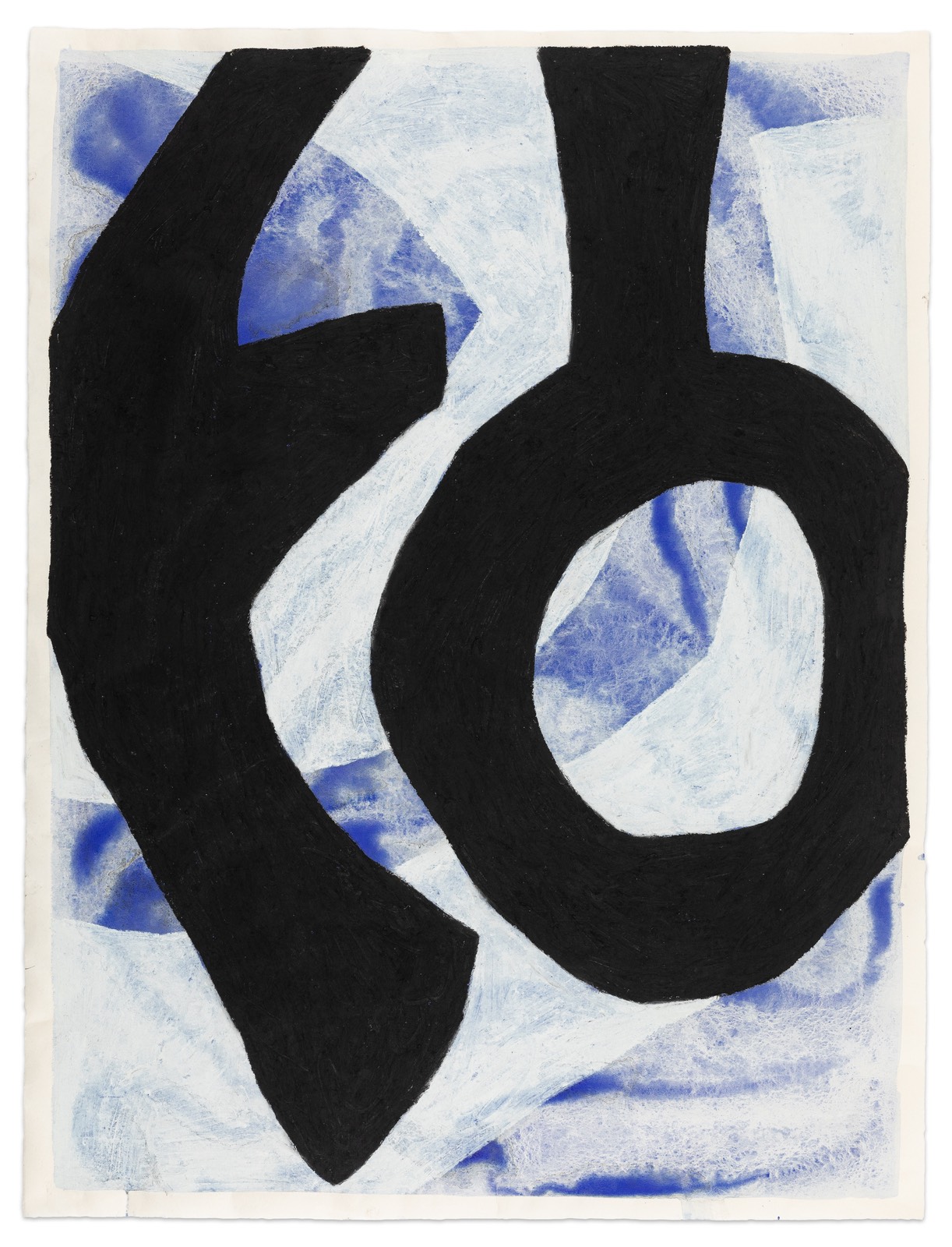
Marc Katano: Selected Paintings 1990–2026 | May 16 - July 2, 2026
Paul Thiebaud Gallery is pleased to announce the opening of Marc Katano: Selected Paintings 1990-2026 on Saturday, May 16th, from 3-5pm, with remarks at 3:30pm. Surveying the past three and a half decades of Katano’s paintings on canvas and handmade paper, the nine works in the exhibition reveal the evolution of his process for creating abstract compositions. Whether cut into plywood sheets, brushed onto canvas or handmade paper, or cut away using a razor, Katano’s paintings embody abundant possibilities for aesthetic expression through personal mark making. The exhibition will be on view through July 2, 2026.
Over more than 50 years, Marc Katano’s work has been guided by the act of inscription. Growing up as a United States “army brat” in Japan, the kanji and hiragana of the signage around him were pictographs without any meaning beyond their forms, and would eventually come to be the inspiration and manifestation of his imagery.
In works such as MK91-50 (1991), Katano has covered the plywood panel with organic shapes in oil based Paintstik, into which he later carved patterns of flowing lines using a woodcutting tool to expose the raw wood beneath. A similar process of carving as a form of erasure using a razor appears in his newest works, like Drishti 14 (2025).
In evocative works such as Grace (2000) and Half Light (2009), Katano has employed a brush and stick, respectively, to create forms that resemble leaves or petals, although any direct association was not his intention. A similar process took place with Fools Errand (2024) and Bookmatch (2017).Katano created the more minimal works Unfolding Bloom (2007) and Sub Rosa (2008) by painting forms in a contrasting color over the background, then washing away paint that was still wet, leaving edges and random areas adhering to the ground, and imparting a sense of change and serendipity to each work. In See (2019), Katano layered thin washes of the same tone of acrylic, producing compositions full of vivid depth and suspended movement.
Full of grace and sensuousness, Katano creates abstractions that exist within the realm of the transcendent and sublime.
Marc Katano was born in Tokyo, Japan in 1952. In 1975, he earned his Bachelors of Fine Art with Distinction from the California College of Arts and Crafts in Oakland (now California College of the Arts, San Francisco), and in 1981 he received the SECA Award from the San Francisco Museum of Modern Art. His paintings have been exhibited across the United States, and in Italy and Japan. His work is in the collections of the San Francisco Museum of Modern Art, Fine Arts Museums of San Francisco, Crocker Art Museum, Honolulu Museum of Art, San Jose Museum of Art, and the Zimmerli Art Museum, Rutgers University, among others. This is Marc Katano’s first solo exhibition with Paul Thiebaud Gallery.
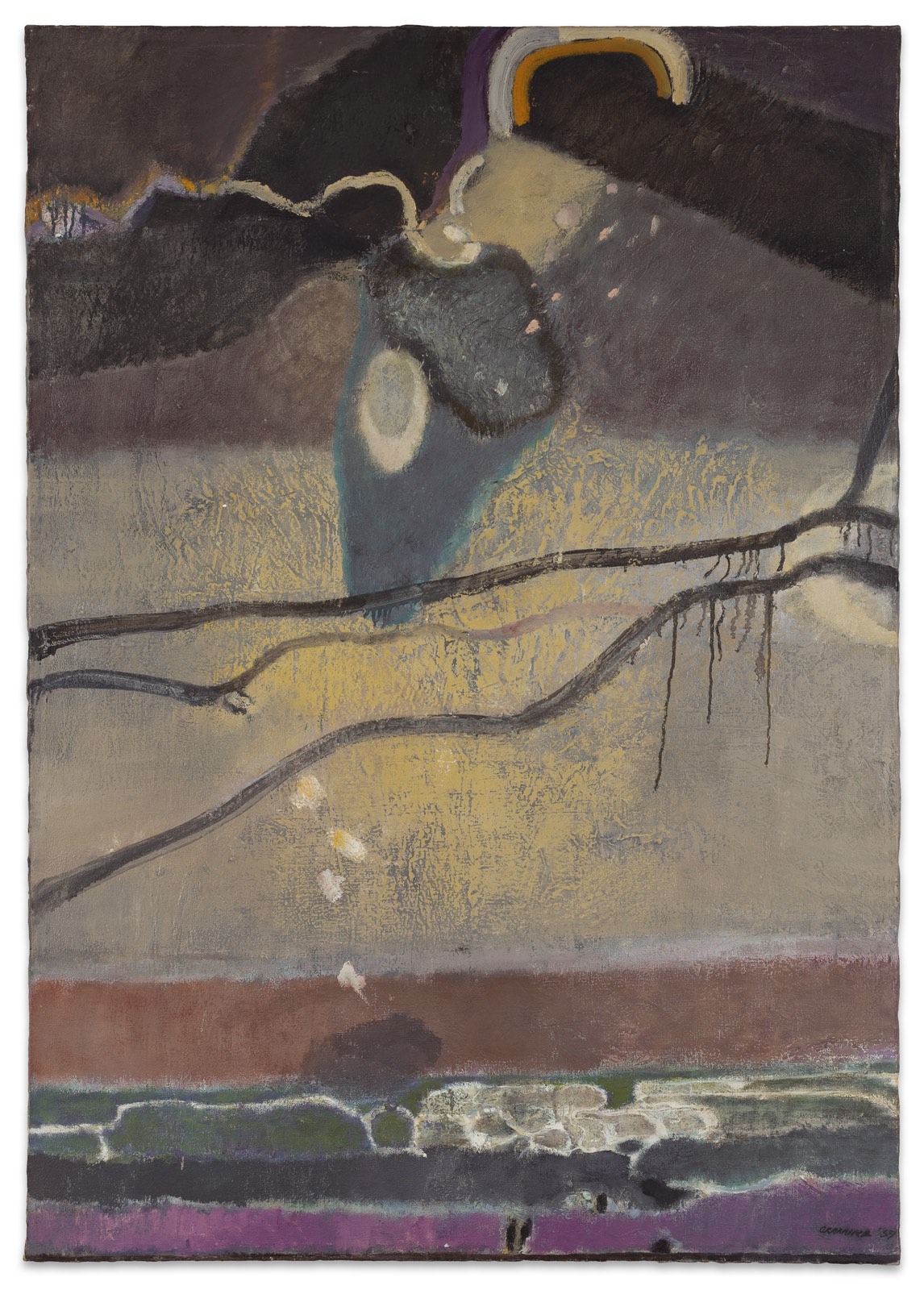
Arthur Okamura: Abstract Visions | May 16 - July 2, 2026
Paul Thiebaud Gallery is pleased to announce the opening of Arthur Okamura: Abstract Visions on Saturday, May 16th, from 3-5pm, with remarks at 3:30pm. On view will be twelve paintings and works on paper from the late 1950s and 1960s reflecting Okamura’s transition from his Zen influenced Abstract Expressionist period to the surreal, visionary works he created as the counter cultural revolution took hold in the San Francisco Bay Area. The exhibition will be on view through July 2, 2026.
After studying at the School of the Art Institute of Chicago and the University of Chicago, Arthur Okamura moved his wife and first-born child to San Francisco in 1956. Following his arrival, Okamura left behind the academically inspired, representations style he had been using while studying and began exploring Abstract Expressionism, then in vogue in the San Francisco art scene. Okamura’s journey through the style lasted until around 1962 and was unique among both the older generation of artists who created the movement and the younger artists who were his contemporaries. Unlike other practitioners, Okamura’s paintings were always informed by and alluded the landscape. In 1959, Okamura began studying Zen Buddhism at the newly founded San Francisco Zen Center with master Suzuki Roshi, which continued until 1969. His practice as a Buddhist influenced his abstract paintings (as well as the rest of his career), imparting a mystical quality to the canvases, as can be seen in works such as Rock & Feathers (1961), Dark Rock (1961), and Phrases for a Crescent Moon (1959). Okamura ended his abstract period abruptly around 1962 because he felt the need find another avenue to explore.
Okamura began exploring sewing banners, etchings, polaroid lights, and sculptures during the break. He would also continue to make watercolors and paintings on paper. Contemporaneously, this period saw the Bay Area counterculture beginning to take hold at greater scale, with many followers of it exploring consciousness expansion through psychedelics. Much of the art produced in this context has been given the catch-all moniker of “visionary” in recognition of the hallucinogenic origins of much of it, though as an umbrella term it encompasses more than that. Okamura’s works of the 1960s fit under this general rubric, and reflect a period when the logic of both his personal life and the broader culture of America did not add up into cohesive visions. Mixing abstract passages with recognizable imagery, Okamura’s surrealist inflected, visionary works render the human unconscious and its irrationality in paint on paper. Informed by his Zen studies, each work by Okamura emanates a spiritual essence that resonates in the eyes and minds of viewers.
Born in Long Beach, CA, in 1932, Arthur Shinji Okamura grew up in the city of Compton, a part of greater Los Angeles. During WWII, Okamura and his family were first moved to the Santa Anita Racetrack Assembly Center and later sent to the Amache Internment Camp near Granada, CO. When the war ended, Okamura’s family moved to Chicago. Between 1950 - 1954, Okamura studied painting at the School of the Art Institute of Chicago. He also took classes at the University of Chicago and a summer seminar at Yale University. While still a student, Okamura had his first solo exhibition of paintings at Chicago’s Frank Ryan Gallery in 1953. After moving to San Francisco with his young family in 1956, and later up the coast to Bolinas in 1959, Okamura began studying Zen Buddhism under master Shunryu Suzuki Roshi at the San Francisco Zen Center. Okamura also began teaching in the early 1960s, which eventually led to his tenure at the California College of Arts and Crafts (now California College of the Arts) from 1966-1997. Arthur Okamura died in 2009 at the age of 77.
Arthur Okamura’s paintings, drawings, watercolors, and prints have been exhibited extensively across the United States and can be found in the collections of the Whitney Museum of American Art; San Francisco Museum of Modern Art; Smithsonian American Art Museum; Hirshhorn Museum and Sculpture Garden; Art Institute of Chicago; Fine Arts Museums of San Francisco; Denver Art Museum; Phoenix Art Museum; Cincinnati Art Museum; Oakland Museum of California; San Jose Museum of Art; Crocker Art Museum; di Rosa Center for Contemporary Art; Bolinas Museum, and the Iris & B. Gerald Cantor Arts Center at Stanford University, among others. This is Arthur Okamura’s second solo exhibition with Paul Thiebaud Gallery.
Images:
Eileen David, The City Beckons, 2026, oil on board, 8 x 8 in.
Top Left: MYL3Z, I Want You to See Me Like Ma Taffy - II, 2026, acrylic print, leather, cotton paper, 10 3/4 x 11 inches, Bottom Right: John Moore, Shazam, 1990, mixed media on canvas, 14 x 18 inches
Marc Katano, Fool’s Errand, 2024, paintstik and acrylic on Okawara paper, 37 x 28 in.
Arthur Okamura, Phrases for a Crescent Moon, 1959, oil on canvas, 56 1/4 x 39 3/4 in.