

Anderson Collection at Stanford University
314 Lomita Drive, Stanford, CA 94305
South Bay
Monday | 11:00 AM - 5:00 PM
Tuesday | Closed
Wednesday | Closed
Thursday | 11:00 AM - 5:00 PM
Friday | 11:00 AM - 5:00 PM
Saturday | 11:00 AM - 5:00 PM
Sunday | 11:00 AM - 5:00 PM
Monday, June 15 | 1:00 PM - 2:00 PM
Join Jason Linetzky, Museum Director, on this special tour of 1,000 Ways to Hold.
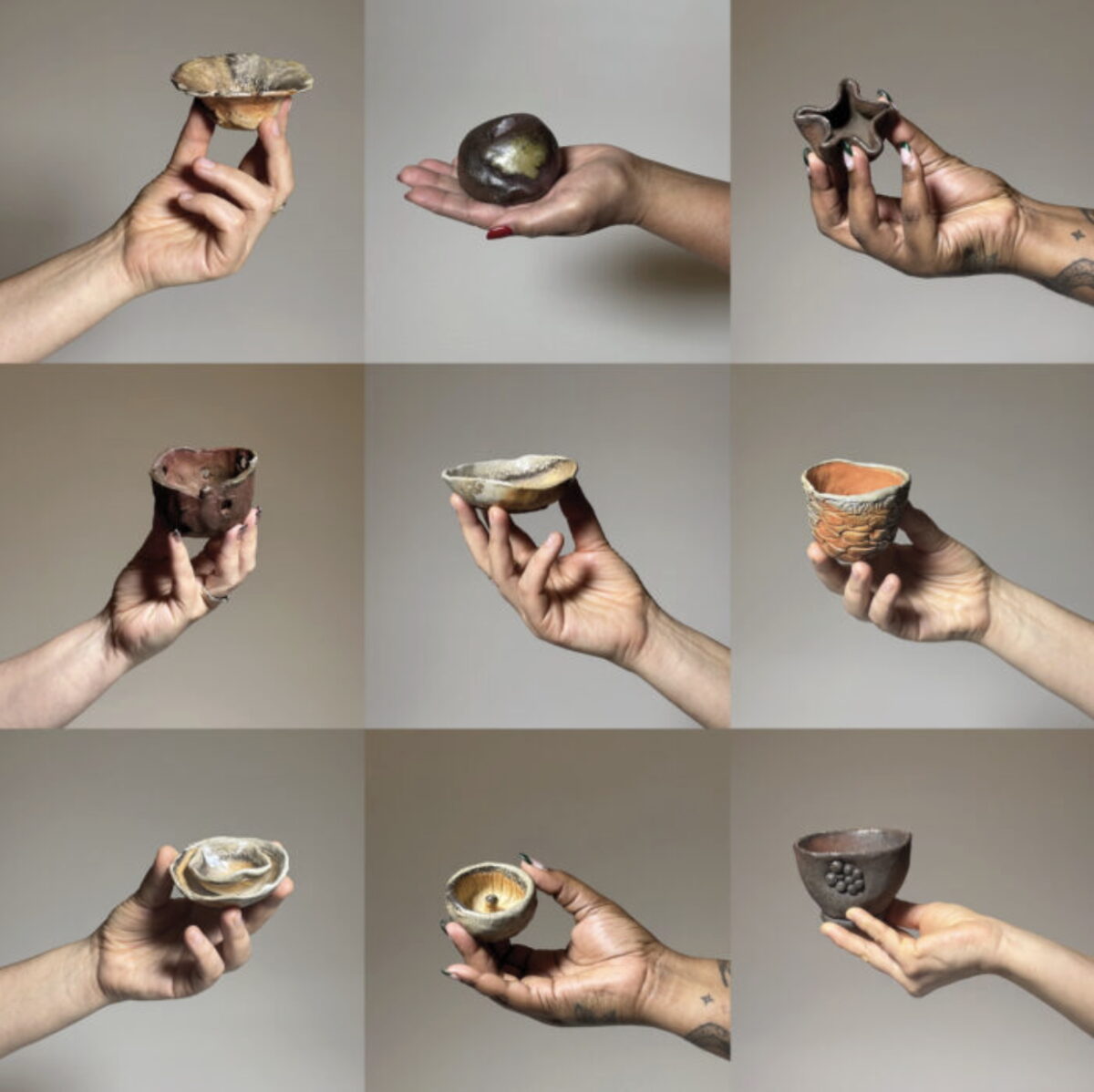
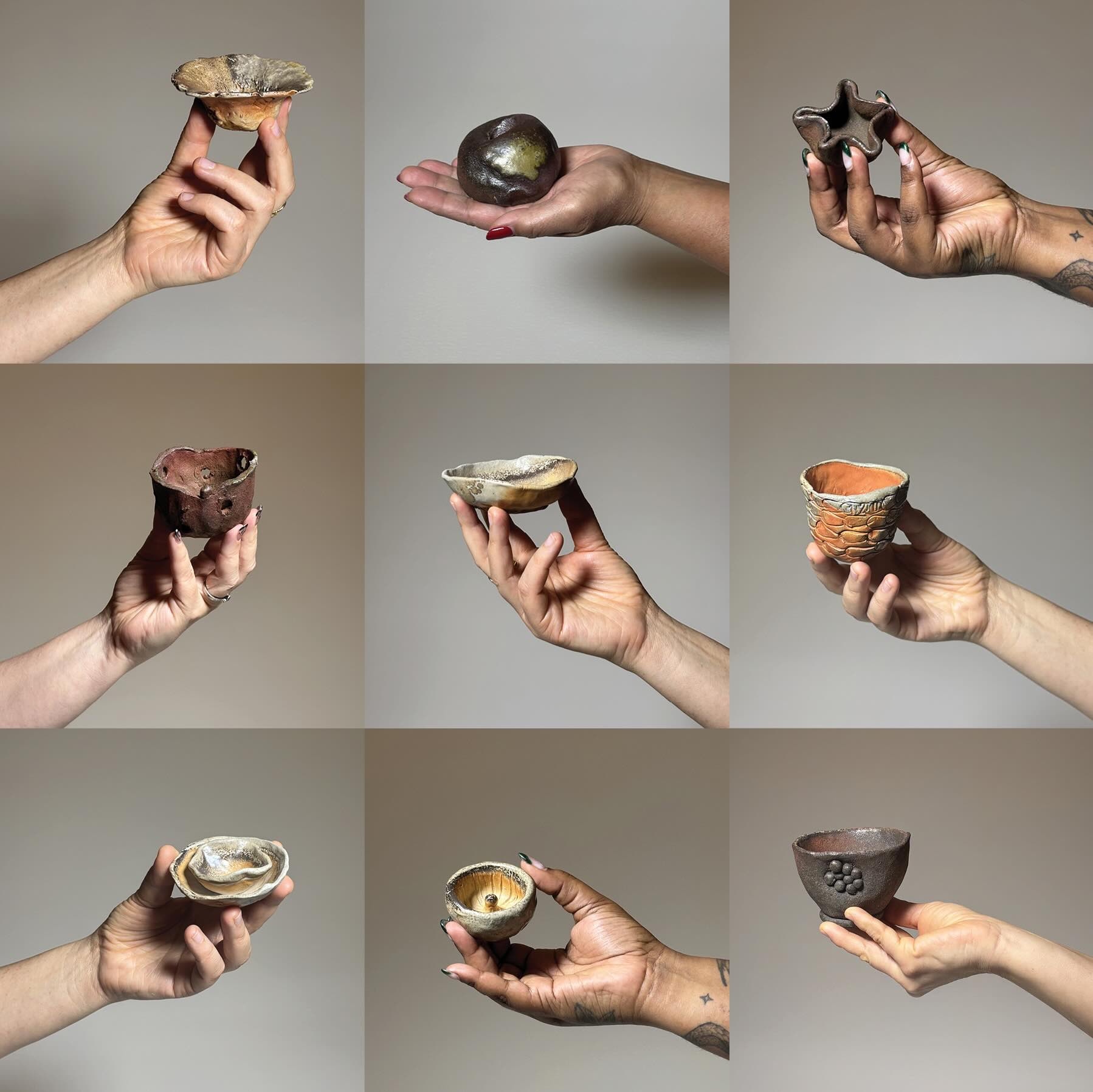
1,000 Ways to Hold is the culmination of a year-long participatory project by Stanford Arts’ 2025–26 Visiting Artist Erika Chong Shuch, rooted in conversation and clay. Developed in response to a moment shaped by loneliness, fragmentation, and uncertainty, the project proposes a tender, human-scale intervention: two people at a time sit together, shape ceramic bowls in pairs, and reflect on the question, What have you held, and what has held you? Created across campus in classrooms, community spaces, and everyday gathering sites, the bowls are embedded with digital traces that capture the intimacy of these shared encounters. In this exhibition at the Anderson Collection, the bowls are gathered and activated, inviting visitors to listen, touch, and engage with a living archive of connection. Together, they form both an artwork and a collective portrait—evidence of how small acts of making and listening can hold memory, care, and community.
The exhibition will be on view in the Wisch Family Gallery from April 2 - August 17, 2026.
Monday, July 6 | 1:00 PM - 2:00 PM
Join artist Erika Chong Shuch on this special tour of her exhibition, 1,000 Ways to Hold.
1,000 Ways to Hold is the culmination of a year-long participatory project by Stanford Arts’ 2025–26 Visiting Artist Erika Chong Shuch, rooted in conversation and clay. Developed in response to a moment shaped by loneliness, fragmentation, and uncertainty, the project proposes a tender, human-scale intervention: two people at a time sit together, shape ceramic bowls in pairs, and reflect on the question, What have you held, and what has held you? Created across campus in classrooms, community spaces, and everyday gathering sites, the bowls are embedded with digital traces that capture the intimacy of these shared encounters. In this exhibition at the Anderson Collection, the bowls are gathered and activated, inviting visitors to listen, touch, and engage with a living archive of connection. Together, they form both an artwork and a collective portrait—evidence of how small acts of making and listening can hold memory, care, and community.
The exhibition will be on view in the Wisch Family Gallery from April 2 - August 17, 2026.
Monday, August 10 | 1:00 PM - 2:00 PM
Join Trisha Lagaso Goldberg, Director of Programs and Engagement the Anderson Collection, on this special tour of 1,000 Ways to Hold.
1,000 Ways to Hold is the culmination of a year-long participatory project by Stanford Arts’ 2025–26 Visiting Artist Erika Chong Shuch, rooted in conversation and clay. Developed in response to a moment shaped by loneliness, fragmentation, and uncertainty, the project proposes a tender, human-scale intervention: two people at a time sit together, shape ceramic bowls in pairs, and reflect on the question, What have you held, and what has held you? Created across campus in classrooms, community spaces, and everyday gathering sites, the bowls are embedded with digital traces that capture the intimacy of these shared encounters. In this exhibition at the Anderson Collection, the bowls are gathered and activated, inviting visitors to listen, touch, and engage with a living archive of connection. Together, they form both an artwork and a collective portrait—evidence of how small acts of making and listening can hold memory, care, and community.
The exhibition will be on view in the Wisch Family Gallery from April 2 - August 17, 2026.
1,000 Ways to Hold | A new work by Erika Chong Shuch
April 2, 2026 - August 17, 2026
1,000 Ways to Hold is the culmination of a year-long participatory project by Stanford Arts’ 2025–26 Visiting Artist Erika Chong Shuch, rooted in conversation and clay. Developed in response to a moment shaped by loneliness, fragmentation, and uncertainty, the project proposes a tender, human-scale intervention: two people at a time sit together, shape ceramic bowls in pairs, and reflect on the question, What have you held, and what has held you? Created across campus in classrooms, community spaces, and everyday gathering sites, the bowls are embedded with digital traces that capture the intimacy of these shared encounters. In this exhibition at the Anderson Collection, the bowls are gathered and activated, inviting visitors to listen, touch, and engage with a living archive of connection. Together, they form both an artwork and a collective portrait—evidence of how small acts of making and listening can hold memory, care, and community.
About the Artist
Erika Chong Shuch is a choreographer, director, and performance maker whose work bridges experimental performance and social practice through inventive forms of audience engagement. Centering people and labor often overlooked, her projects reimagine where and how art-making begins. She is the founder of For You, a performance group that brings strangers together through experiences ranging from intimate encounters to large-scale public gatherings. Erika has been commissioned by the Oregon Shakespeare Festival, Court Theatre (Chicago), The Momentary, Cantor Arts Center, and Edge on the Square (San Francisco). Her work has been supported by Creative Capital, New England Foundation for the Arts, and the Gerbode Foundation. She was a 2022–23 Bay Area Fellow at Headlands Center for the Arts and is currently co-creating The Table with Mei Ann Tao and the San Francisco Civic Theater Project with Jonathan Moscone.
Spotlight | September 10, 2025 - Ongoing
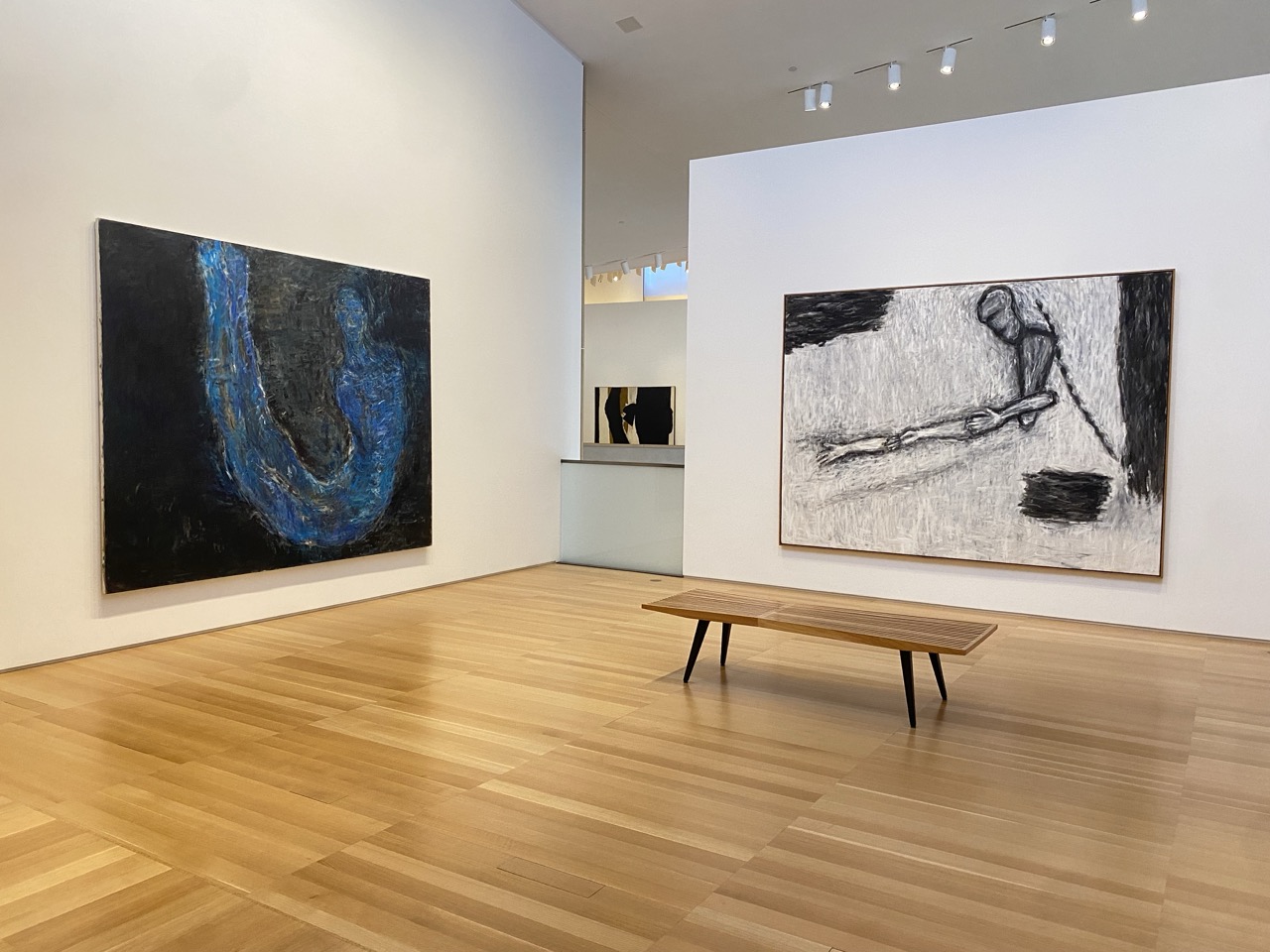
The powerful work of celebrated artist Susan Rothenberg is brought into focus in a dedicated gallery alongside an accompanying photographic portrait by Leo Holub.
About the Artist
Susan Rothenberg (1945–2020) was a trailblazing painter whose bold canvases reintroduced the figure into contemporary art at a time when abstraction dominated. Rising to prominence in the mid-1970s with her iconic horse-centered paintings, she forged a distinctive style that merged gestural brushwork, symbolic imagery, and psychological intensity. Over five decades, Rothenberg expanded her vocabulary to include fragments of the human body, animals, and everyday forms, always maintaining a raw immediacy that bridged abstraction and representation. Born in Buffalo, New York, she studied at Cornell University before moving to New York City, where her early exhibitions helped redefine painting for a new generation. Her work has been the subject of major retrospectives at institutions such as the Albright-Knox Art Gallery and the Whitney Museum of American Art, securing her place as one of the most influential painters of her era.
Image:
A selection of ceramic bowls created during 1,000 Ways to Hold workshops, and installation view of Spotlight exhibition on Susan Rothenberg. Courtesy of the Anderson Collection.